3 Immune-Boosting Tonics to Support You Through the Colder Months (and beyond) 🍋
Brief Overview
Three traditional tonics can be lovely additions to your routine as the weather cools: a Lemon, Ginger & Manuka Immune Elixir for daily sipping, a Fire Cider (a recipe from Dr Kara Fitzgerald) for the first sign of a sniffle, and an Elderberry & Thyme Immune Syrup for coughs. They support your routine rather than replace the foundations: a nourishing whole-food diet, quality sleep and stress management. Each recipe below includes ingredients, method and suggested use.
As we move through the cooler months, I'm often asked for simple, natural ways to support immune resilience. While nothing replaces a nourishing whole-food diet, quality sleep and stress management, these traditional tonics can be beautiful additions to your routine.
Below are three of my favourite immune-supportive blends, including a much-loved recipe from Dr Kara Fitzgerald.
What are immune-supportive tonics, and where do they fit?
Immune-supportive tonics are traditional food-based preparations made with ingredients such as ginger, garlic, lemon, honey, elderberry and thyme. They are best used as a supportive extra alongside a whole-food diet, good sleep and stress management, rather than as a stand-alone fix.
How do you make a Lemon, Ginger & Manuka Immune Elixir?
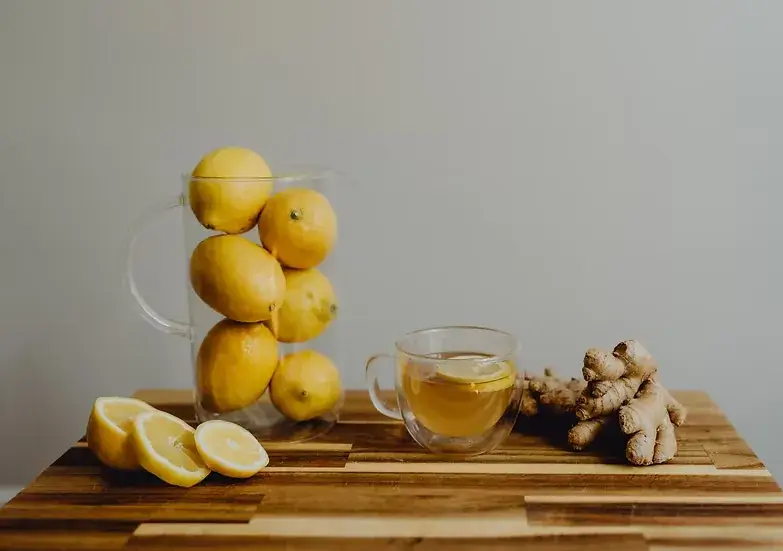
This tonic combines vitamin C from lemon, ginger's anti-inflammatory compounds and the antimicrobial activity of Manuka honey. It supports mucosal immunity, soothes sore throats and helps modulate inflammatory pathways. Sip it daily during winter or at the first sign of illness.
Ingredients
2 tsp freshly grated ginger (more as desired)
Juice of 1 lemon
1 tsp Manuka honey (MGO rated if possible)
250 ml hot (not boiling) filtered water
Optional: pinch of cinnamon or turmeric
Method
Add grated ginger to a mug.
Pour over hot water and steep for 5–10 minutes.
Stir in lemon juice and honey once the water has cooled slightly (to preserve the lemon's vitamin C and the honey's properties).
Add optional spices if desired.
Suggested use: Sip daily during winter or at the first sign of illness.
How do you make Fire Cider?
Fire Cider is a warming, stimulating tonic rich in antimicrobial, antiviral and circulation-enhancing ingredients. Ginger, garlic and horseradish support immune cell activity and lymphatic flow, while apple cider vinegar and raw honey offer antimicrobial and soothing properties. It is ideal at the first sign of a sniffle. This recipe is courtesy of Dr Kara Fitzgerald.
Ingredients
125 g fresh grated organic ginger root (approx. ½ cup)
125 g fresh grated organic horseradish root (approx. ½ cup)
1 medium organic onion, chopped
10 cloves organic garlic, crushed or chopped
2 organic jalapeño chillies, chopped
Juice and zest of 1 lemon
2 tbsp dried rosemary leaves
1 tbsp turmeric powder
¼ tsp cayenne powder
Organic apple cider vinegar (enough to fully cover ingredients — approx. 750 ml–1 litre)
60 ml (¼ cup) raw local honey, or to taste
Method
Prepare your roots, fruits and herbs and place them in a quart-sized glass jar. If you've never grated fresh horseradish, be prepared for a powerful sinus-opening experience!
Pour the apple cider vinegar into the jar until all of the ingredients are covered and the vinegar reaches the jar's top.
Use a piece of natural parchment paper under the lid to keep the vinegar from touching the metal, or a plastic lid if you have one. Shake well.
Store in a dark, cool place for a month and remember to shake daily.
After one month, use cheesecloth to strain out the pulp, pouring the vinegar into a clean jar. Be sure to squeeze as much of the liquid from the pulp as you can while straining.
Add the honey and stir until incorporated.
Taste your cider and add more honey until you reach the desired sweetness.
Makes: Approx. 1 litre
Want Support That Goes Beyond the Tonics?
If you seem to catch every bug going around, or feel run down all winter, there is usually more to look at than a recipe can cover. Gut health, nutrient status, sleep and stress all feed into immune resilience. An initial consultation is the place to start.
How do you make an Elderberry & Thyme Immune Syrup?
Elderberries are traditionally used to reduce the severity and duration of upper respiratory infections, and they are rich in anthocyanins that support immune signalling. Thyme adds antimicrobial and expectorant properties, which makes this syrup particularly helpful for coughs.
Ingredients
1 cup (approx. 100 g) dried elderberries
2 cups (500 ml) filtered water
1 tbsp fresh thyme (or 1 tsp dried)
1 small cinnamon stick
½ cup (125 ml) raw or Manuka honey (MGO rated if possible)
Method
Add elderberries, water, thyme and cinnamon to a saucepan.
Bring to a gentle simmer, then reduce the heat and cook for 30–40 minutes until the liquid reduces by about half.
Remove from heat and allow to cool slightly.
Strain through a fine sieve or cheesecloth.
Once lukewarm, stir in the honey.
Store in a glass jar in the fridge for up to 2–3 weeks.
Suggested use:
Adults: 1 tablespoon daily for prevention, up to 3 times daily during acute illness.
Children (over 1 year): 1 teaspoon daily.
What matters more than any tonic?
Whole-food eating, quality sleep and stress management do the heavy lifting for immune resilience. Tonics sit on top of those foundations as a supportive extra. If the foundations are shaky, a tonic alone is unlikely to make much difference.
Think of your tonics as the finishing touch on a routine that already includes plenty of colourful vegetables, enough protein, regular sleep and some form of stress regulation. If any of those are out of balance, that is the place to start.
This week: pick one tonic and make it. The Lemon, Ginger & Manuka Elixir takes five minutes and is the easiest place to begin. Start Fire Cider this week if you'd like it ready in a month.
The reframe: small rituals add up
You don't need an elaborate winter routine. A warm mug in the evening, a jar of something good in the fridge and a pot of Fire Cider quietly infusing in the cupboard are small, nourishing rituals that make the colder months feel supported rather than something to get through.
Frequently asked questions
Can a functional nutritionist help with immune resilience and recurrent winter illness?
Yes. In an initial consultation I take a thorough history, look at your diet, gut health, sleep and stress, and build a clear, staged plan around what is driving your picture. You can book online, or get in touch to arrange a free 15-minute call first.
When should I use each tonic?
Sip the Lemon, Ginger & Manuka Elixir daily through winter or at the first sign of illness. Fire Cider is best at the first sign of a sniffle. The Elderberry & Thyme Syrup is particularly helpful for coughs.
How long does Fire Cider take to make?
Fire Cider needs to infuse in a dark, cool place for one month, shaken daily. After that, strain it, stir in the honey and it is ready to use.
How long does elderberry syrup last?
Stored in a glass jar in the fridge, it keeps for 2–3 weeks.
Can children have these tonics?
The Elderberry & Thyme Syrup can be given to children over 1 year at 1 teaspoon daily. For any other tonic, or if your child has a health condition or takes medication, please check with their practitioner first.
Why should the water be hot but not boiling in the elixir?
Letting the water cool slightly before adding the lemon juice and honey helps preserve the vitamin C in the lemon and the honey's properties.
Do I need to use Manuka honey?
Manuka honey (MGO rated if possible) is my first choice for the elixir and the syrup, and raw honey also works in the syrup. For Fire Cider, use raw local honey.
Ready to build real immune resilience?
If you would like someone to look at the whole picture, I would love to help.
Book a Gut Health Consultation
A comprehensive deep dive into your history, symptoms and bloods, with a clear, staged plan. Online worldwide, or in person on Sydney's Northern Beaches. You will receive a confirmation with your health history form so I can review your story before we meet.
Not Sure Yet? Arrange a Free 15-Minute Call
Ask a few questions and see whether we are the right fit before you commit to a full consultation.
Free Download: The Anti-Inflammatory Diet Starter Guide
The way of eating I use every day in clinic, and the foundation of immune resilience through the colder months.
I look forward to working with you. Thank you for trusting me with your story.
Sonia Savage, Functional Nutritionist, Sydney. BHSc (Complementary Medicine, with Distinction), AdvDip (Nutritional Medicine), Registered Clinical Nutritionist, ATMS.
Sonia Savage is a Functional Nutritionist based in Sydney, consulting online Australia-wide and worldwide. With nine years of clinical experience, including senior clinical work in nutrigenomics at MTHFR Support, she specialises in fertility and preconception care, autoimmune and thyroid conditions, gut health and histamine issues, hormones and perimenopause, and children's wellness. Sonia has been a guest expert on the Designs for Health Wellness by Designs podcast and mentors other practitioners on complex cases. Her approach: everything is connected, and getting to the root cause beats chasing symptoms every time.