How Can You Support Your Immune System Naturally? 5 Simple Ways That Make a Real Difference

Brief Overview
Your immune system does its best work when the basics are in place, well before you feel the first scratchy throat. Five simple habits carry most of the weight: wash your hands properly, eat plenty of vitamin C and zinc-rich foods, sip warming herbal teas, fill your plate with colourful seasonal vegetables, and keep a small, practitioner-guided supplement kit on hand. Underneath all five sits your gut, where much of your immune tissue lives, along with sleep, stress and sunlight. If you or your children seem to catch everything going around, or take weeks to bounce back, that is worth looking into properly.
Every year it starts the same way. One child brings something home from school, it moves through the household, and just as everyone recovers, the next round arrives.
In clinic I see these waves of colds, flus and Covid well before the weather turns properly cold, and again as the seasons change. The people who seem to sail through are rarely doing anything dramatic. They have simply put a few quiet foundations in place early.
Here are the five I come back to with my own family and my clients, plus what to do if you feel like you are always the one who catches it.
What actually supports your immune system?
Your immune system relies on steady, everyday inputs: good hygiene to reduce exposure, nutrients such as vitamin C and zinc that immune cells depend on, a healthy gut microbiome, enough sleep, and a calm stress response. No single food or supplement "boosts" immunity. Consistent basics, started before you get sick, make the biggest difference.
It is tempting to look for one magic product when everyone around you is coughing. In practice, immune resilience is built the same way most health is built: a little, every day.
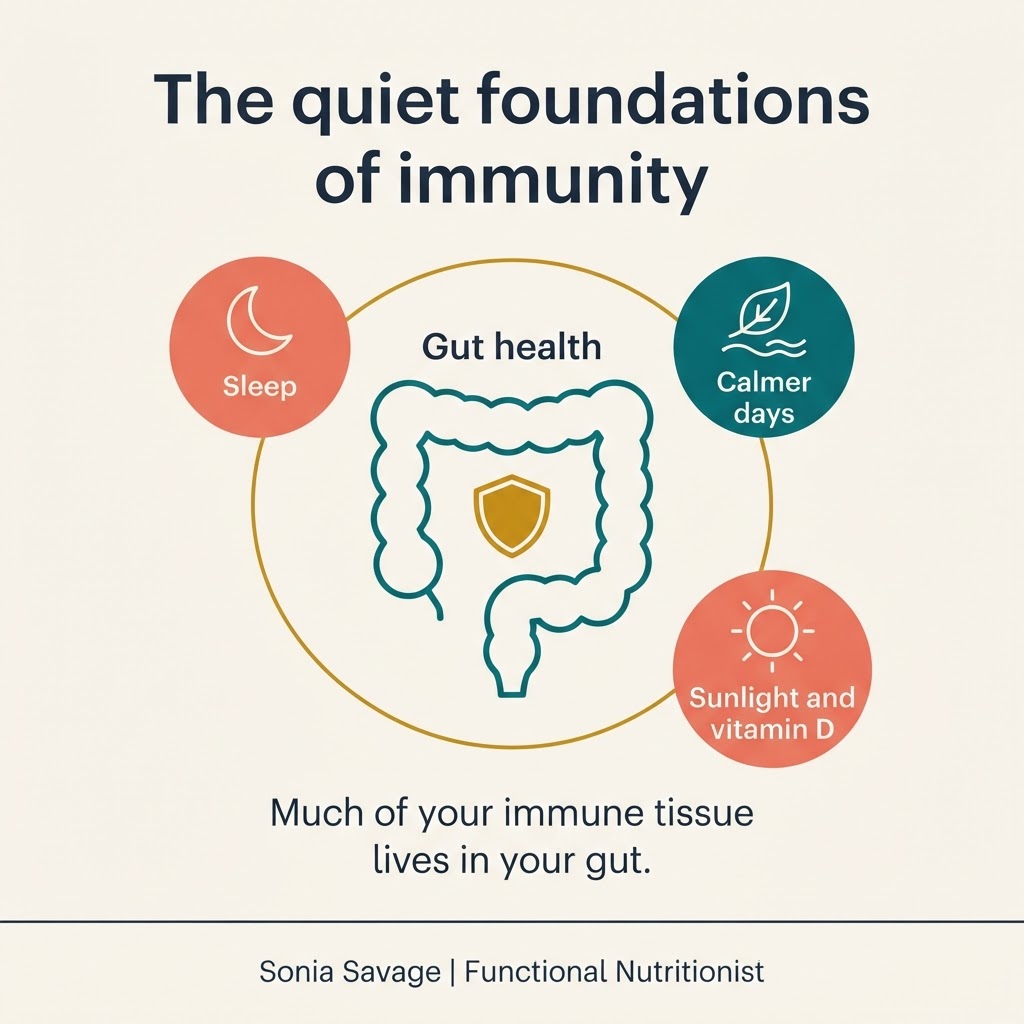
A large share of your immune tissue sits in and around your gut, which is why gut health comes up again and again in this article. What you eat feeds the bacteria that help train and regulate your immune cells. Sleep is when much of that repair work happens. And a stressed nervous system, running on high cortisol for weeks at a time, tends to leave you more exposed.
With that in mind, here are the five simple ways I recommend.
1. Why is handwashing still the first step?
Proper handwashing with soap and water is one of the simplest and most effective ways to reduce the spread of viruses. Washing for around 20 seconds, covering the backs of the hands, between the fingers and under the nails, and making it a household habit on arriving home, cuts down how often germs reach your eyes, nose and mouth.
It is not glamorous, but it works, and it costs nothing.
The detail that matters is technique. A quick rinse under the tap does very little. Soap, a good lather, and enough time to cover every surface of your hands is what makes the difference.
The most useful habit I suggest to families is this: everyone washes their hands as soon as they walk in the door. After school, after work, after the shops. Do it together for a week or two and it becomes automatic, even for the little ones.
2. Which nutrients and foods support immune function?
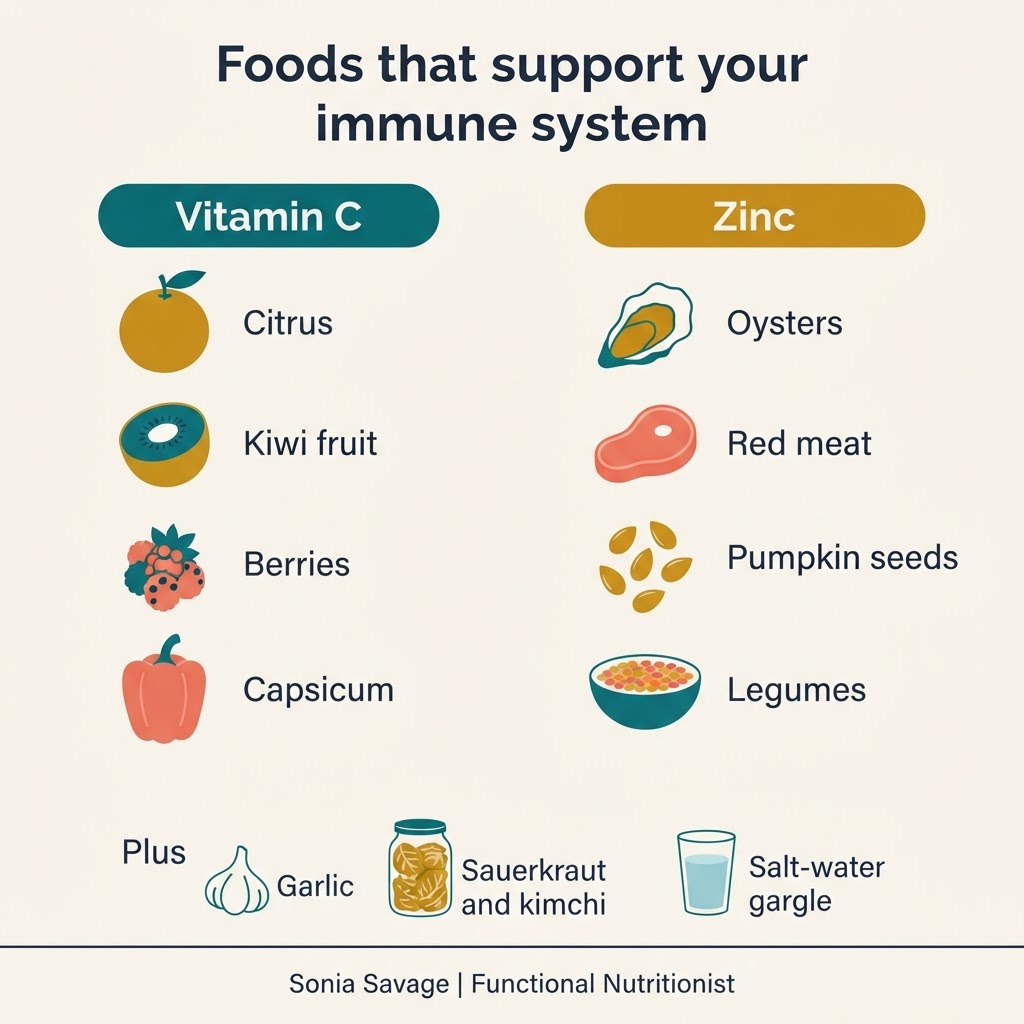
Vitamin C and zinc both play important roles in normal immune function. Good vitamin C sources include citrus, kiwi fruit, berries and capsicum. Zinc-rich foods include oysters, red meat, liver, pumpkin seeds and legumes. Garlic, fermented foods such as sauerkraut and kimchi, and a simple salt-water gargle round out a practical immune-supportive kitchen.
Food is where I always start, because it supports your immune system every single day, not just when you remember to take something.
Vitamin C foods. Citrus fruits, kiwi fruit, berries, capsicum (red is especially rich), broccoli and parsley. Vitamin C is water-soluble and your body does not store much of it, so a little across the day works better than one big hit.
Zinc foods. Oysters are the standout, followed by red meat, liver, pumpkin seeds, cashews and legumes such as chickpeas and lentils. Zinc is one of the nutrients I most often find running low in bloods, particularly in people who eat little red meat.
Garlic. Garlic has long been valued for its natural antimicrobial properties. Crush or chop it and let it sit for a few minutes before cooking, and add it towards the end where you can.
Fermented foods. Sauerkraut, kimchi, kefir and plain yoghurt feed the gut microbiome, which is critical for a well-regulated immune system. Start with a teaspoon or two a day if you are new to them. (If fermented foods tend to leave you flushed, itchy or bloated, they may not suit you right now, and that is worth exploring — see my gut health and histamine work.)
The old-school salt-water gargle. Gargling and spitting with warm water and a good-quality salt is wonderfully soothing for a sore throat and mouth ulcers. It is one of those remedies our grandmothers knew about, and it still earns its place.
This colourful, mostly wholefood way of eating is the same foundation I use every day in clinic. It is laid out step by step in my free Anti-Inflammatory Diet Starter Guide.
3. Do warming herbal teas help?
Herbal teas made with fresh ginger, turmeric and lemon are soothing, warming and an easy way to stay hydrated when you are run down. Hydration helps keep the mucous membranes in your nose and throat moist, which is part of your first line of defence. Think of a daily pot of tea as gentle, everyday support rather than a cure.
When the weather cools, or when you feel something coming on, a pot of fresh ginger, turmeric and lemon tea is one of the simplest rituals you can build.
Ginger and turmeric are both warming and have long histories in traditional cooking and herbal medicine. Lemon adds a little vitamin C and flavour. And every cup counts towards hydration, which matters more than most people realise when you are unwell. Your nose and throat rely on moist mucous membranes to trap and clear germs.
My simple version: a few slices of fresh ginger, a slice of fresh turmeric (or a pinch of ground turmeric with a crack of black pepper), and half a lemon, steeped in boiling water for five to ten minutes. Make a pot in the morning and sip it through the day. (A disrupted cortisol rhythm from ongoing stress is one of the things that quietly runs down immunity too.)
4. Why do seasonal vegetables matter?
Seasonal vegetables are at their freshest, most flavoursome and most nutrient-dense. A wide variety of colourful vegetables supplies antioxidants that help protect your cells and fibre that feeds the gut bacteria involved in immune regulation. Aim for as many different colours and types across the week as you can.
Whatever the season, the principle is the same: eat a wide variety of vegetables, and lean on what is growing right now.
In the cooler months that means pumpkin, sweet potato, beetroot, carrots and leafy greens, roasted, blended into soups or added to slow-cooked stews for easy comfort meals. In spring, think broccoli, asparagus, peas, spinach and fresh herbs. In summer, capsicum, tomatoes, zucchini and berries.
The colours are not just pretty. Different-coloured plants carry different antioxidants, and the fibre in vegetables feeds the gut bacteria that help keep your immune system balanced. One easy goal: try to eat a "rainbow" across each week, and add one vegetable you have not had for a while.
Always the First to Catch It?
If you, or your children, seem to pick up every bug going around, take weeks to recover, or have one infection after another, that is not just bad luck. It is often a sign that something underneath needs attention: low iron, zinc or vitamin D, a gut that needs support, poor sleep or ongoing stress. This is exactly the kind of puzzle I work through in an initial consultation, including through my children's wellness work.
5. Which immune supplements do I keep on hand?
A small, practitioner-guided kit is useful during cold and flu season. The two I reach for most are a herbal throat spray and a combined zinc and vitamin C powder that tastes good and can be used for children over three in a smaller dose. The right product and dose depend on your age, health and medications, so get guidance before you start.
During cold and flu season there are two practitioner-only products I love to have in the cupboard: a herbal throat spray for that first scratchy-throat moment, and a zinc and vitamin C powder that actually tastes good. Children over three can also take a small dose of the powder, which makes it a family favourite.
I prefer practitioner-only products because the quality, forms and doses are reliable, and because I can match them to the person. Zinc, for example, is very helpful in the right amount and unhelpful in too high a dose for too long. Some products are also the wrong choice alongside certain medications, in pregnancy, or for very young children.
If you are already a client and do not yet have these on your Vital.ly dispensary account, just send me a note and I will add them for you. If you are new, get in touch and I can guide you on what suits you and your family, and how much to take.
What else makes a difference: sleep, stress and sunlight?
Sleep, stress and vitamin D are the quiet foundations underneath the five habits above. Regular, adequate sleep supports immune repair, ongoing stress and high cortisol tend to dampen immune defences, and vitamin D, made mainly from sensible sun exposure, plays a role in normal immune function.
You can eat beautifully and still feel run down if these three are off.
Sleep. Much of your body's immune repair work happens overnight. A regular bedtime, a dark, cool bedroom and fewer screens in the last hour before bed are simple places to start.
Stress. Short bursts of stress are normal. Weeks or months of it, with cortisol running high, tend to leave people more prone to picking things up and slower to recover. A daily walk, a few slow breaths before meals, or ten quiet minutes in the garden all count.
Sunlight and vitamin D. Your skin makes vitamin D from sunlight, and it plays a role in normal immune function. Even in sunny Sydney, many people run low, particularly through winter or if they work indoors. A few minutes of sensible sun exposure, following sun-safety advice, and a vitamin D check on your next blood test are worthwhile.
One more to keep in mind: if your family seems to be sick far more often since moving house, or you notice damp patches, a musty smell or visible mould at home, it is worth considering mould exposure as part of the picture.
When should you get extra support?
Frequent infections, colds that drag on for weeks, recurring tonsillitis, ear or chest infections, or a child who seems to be sick every other week are signs that something deeper may need attention. Seek urgent medical care for breathing difficulty, chest pain, a high fever that will not settle, signs of dehydration, or any fever in a baby under three months.
Catching a few colds a year is normal, especially with young children in the house. What is worth looking into is a pattern: one illness rolling into the next, slow recovery, or infections that keep coming back to the same place.
In clinic, I look at the whole picture. That includes a thorough history, your bloods reviewed against optimal ranges (iron, zinc, vitamin D and more), gut health, sleep and stress, and in some cases your home environment. When the immune system is overactive rather than underactive, as in autoimmune and thyroid conditions, the approach is different again, which is one more reason to get individual advice.
Natural support works alongside medical care, never instead of it. If you are worried, see your GP, or call healthdirect on 1800 022 222 for advice at any hour. In an emergency, call 000.
What does this look like, put together?
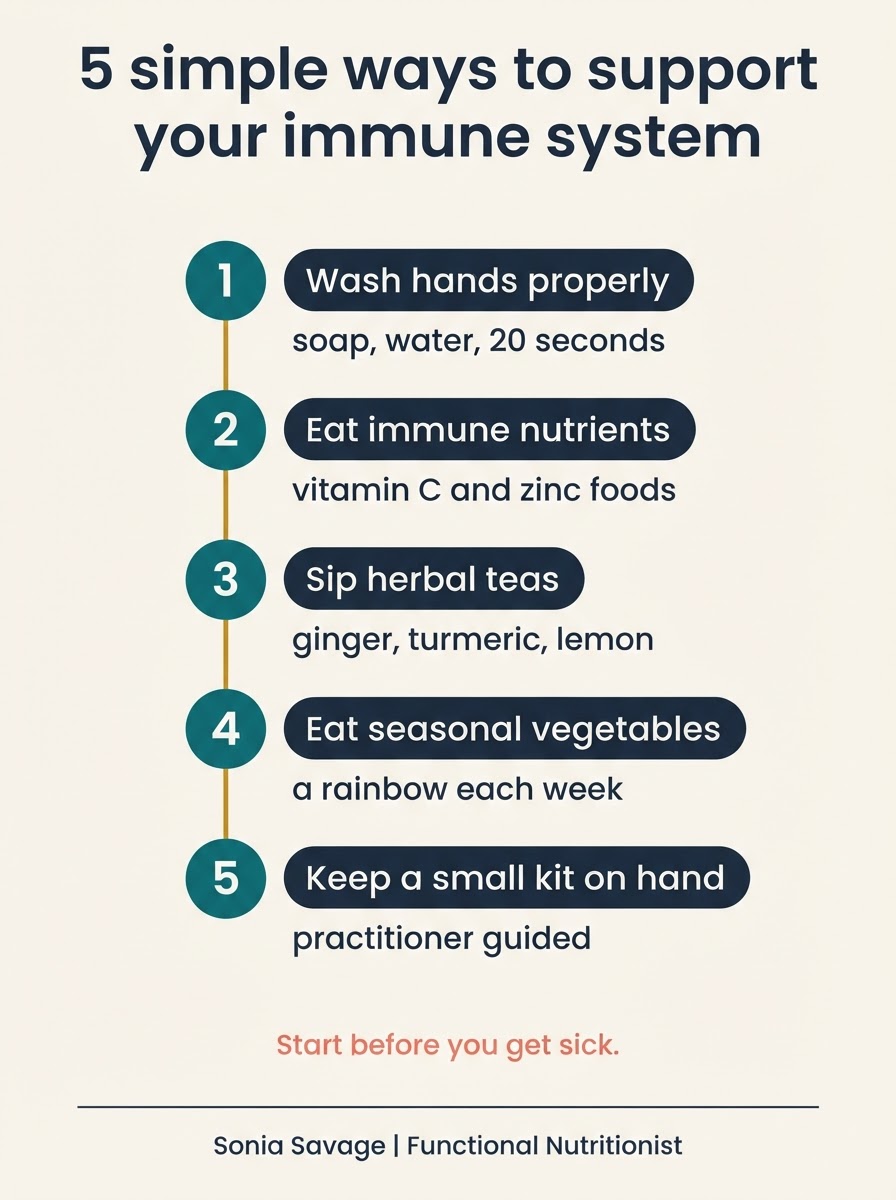
Five simple habits, started before you get sick: wash your hands well, eat vitamin C and zinc-rich foods with garlic and fermented foods, sip warming herbal teas, fill your plate with colourful seasonal vegetables, and keep a small, practitioner-guided supplement kit on hand. Support all five with good sleep, calmer days and a little sunshine.
Here is the whole approach in one place:
Wash hands properly, and often. Soap, water and around 20 seconds, with everyone washing as soon as they arrive home.
Eat immune-supportive nutrients. Vitamin C and zinc-rich foods daily, plus garlic and a little fermented food.
Sip warming herbal teas. A daily pot of fresh ginger, turmeric and lemon for warmth and hydration.
Eat colourful seasonal vegetables. Aim for a rainbow across the week, roasted, souped or stewed.
Keep a small supplement kit on hand. A throat spray and a zinc and vitamin C powder, with guidance on what suits you and your family.
This week, start with just two: the handwashing habit at the door, and one immune-supportive food added to every meal. Small steps, done consistently, are what build resilience.
The reframe: prevention is quiet, and that is the point
The best immune support rarely feels dramatic. It looks like clean hands, a warm cup of tea, a colourful dinner and an early night. Done consistently, before the season really kicks in, those quiet habits add up.
And if you are doing the basics and still catching everything, your body is telling you something. That is not a reason to worry. It is a reason to look a little deeper.
Frequently asked questions
Can a functional nutritionist help if I keep getting sick?
Yes. When infections are frequent or slow to clear, I look for the drivers underneath, such as low iron, zinc or vitamin D, gut health, sleep, stress and environmental factors like mould. In an initial consultation I take a thorough history, review your bloods against optimal ranges, and give you a clear, staged plan. You can book online, or get in touch to arrange a free 15-minute call first.
Can you help children who are always sick?
Yes. Children's wellness is a core part of my practice. Kids who catch every bug at school or daycare often benefit from small, practical changes to food, sleep and gut health, and sometimes from targeted nutrients in child-appropriate doses. I work with parents to make the plan realistic for busy family life.
Which foods are best for the immune system?
Vitamin C foods such as citrus, kiwi fruit, berries and capsicum, and zinc-rich foods such as oysters, red meat, pumpkin seeds and legumes, are the standouts. Add garlic, a little fermented food like sauerkraut or kimchi, and a wide variety of colourful seasonal vegetables for antioxidants and fibre.
Are zinc and vitamin C supplements safe for children?
Some zinc and vitamin C products are suitable for children over three in a smaller, age-appropriate dose. Too much zinc for too long can cause problems, so the right product and amount depend on your child's age, weight and health. Please ask for guidance rather than using an adult dose.
Does gut health really affect immunity?
Yes. A large share of your immune tissue sits in and around the gut, and your gut bacteria help train and regulate immune responses. Fibre from vegetables and legumes, and fermented foods if they suit you, help feed a healthy microbiome.
Do I need supplements if I eat well?
Not always. Food is the foundation, and many people do well with diet, sleep and stress support alone. Supplements are most useful when bloods show a gap, such as low zinc, iron or vitamin D, or as short-term support during cold and flu season.
When should I see a doctor instead?
See your GP if symptoms are severe, last longer than expected, or keep coming back. Seek urgent care for breathing difficulty, chest pain, a high fever that will not settle, signs of dehydration, or any fever in a baby under three months. Natural support works alongside medical care, not instead of it.
Ready to build stronger foundations for your whole family?
If you are tired of one bug rolling into the next and would like someone to look at all the angles, I would love to help.
Book an Initial Consultation
A comprehensive deep dive into your history, symptoms, diet and bloods, with a clear, staged plan. Online worldwide, or in person on Sydney's Northern Beaches. You will receive a confirmation with your health history form so I can review your story before we meet.
Not Sure Yet? Arrange a Free 15-Minute Call
Ask a few questions and see whether we are the right fit before you commit to a full consultation.
Free Download: The Anti-Inflammatory Diet Starter Guide
The way of eating I use every day in clinic, and the foundation of the immune-supportive meals described in this article.
I look forward to working with you. Thank you for trusting me with your story.
Sonia
Sonia Savage, Functional Nutritionist, Sydney. BHSc (Complementary Medicine, with Distinction), AdvDip (Nutritional Medicine), Registered Clinical Nutritionist, ATMS.
Sonia Savage is a Functional Nutritionist based in Sydney, consulting online Australia-wide and worldwide. With nine years of clinical experience, including senior clinical work in nutrigenomics at MTHFR Support, she specialises in fertility and preconception care, autoimmune and thyroid conditions, gut health and histamine issues, hormones and perimenopause, and children's wellness. Sonia has been a guest expert on the Designs for Health Wellness by Designs podcast and mentors other practitioners on complex cases. Her approach: everything is connected, and getting to the root cause beats chasing symptoms every time. Read more about Sonia.
The information in this article is general in nature and does not take into account your individual health needs or medical history. It is not a substitute for personalised advice from a qualified health professional.